
Difesain English
French General wants to fight the US over Greenland: “So they will be historical scoundrels.”
French general shocks: “Fight the US on Greenland? Yes, if necessary.” The merciless analysis of a strategic delusion and the numbers that condemn Paris.

n a crescendo of rhetoric that would make the protagonists of the Cold War pale, French General Nicolas Richoux has dropped a media bombshell that, if taken literally, would move the hands of the apocalypse clock forward a few minutes. We are not talking about a conspiracy theorist blogger, but a high-profile former commander who, on television talk shows, evokes scenarios from Dr. Strangelove: fighting against the United States of America.
Yes, you read that right. But let’s take it one step at a time, analyzing the facts with our usual realism (and a pinch of skepticism) that sets us apart.
Who is the ‘Anti-Yankee’ General?
Who is this aggressive French General? Brigadier General (2nd section) Nicolas Richoux, since 2022, is the defense consultant on LCI, a French national TV and Radio Network. A former member of the armored forces, he was commander of the 7th Armored Brigade from 2015 to 2017 and defense attaché at the French Embassy in Berlin from 2017 to 2020.
- 2014-2015, Chief of Staff to the Military Governor of Paris.
- 2012-2014, Senior Lecturer at the War College, Paris.
He is not exactly a none for the French Army.
Inflammatory Words: “Trahison” and Armed Conflict
Two key passages are causing controversy, emerging from an interview on LCI and the columns of the French press:
- Aid to Ukraine: Richoux described the possible halt to American aid (from Trump’s perspective) as a “trahison absolue” (absolute betrayal). This is emotional terminology, more suited to a wounded lover than a military strategist, which ignores the simple fact that states have interests, not feelings.
- Physical Conflict: In a video circulating online, when asked whether it would be necessary to fight against the Americans (assuming a scenario of aggression against an allied territory, such as Greenland), the General did not back down.
“Moi éventuellement, oui je pense qu’il faudrait se battre contre les Américains…”
(I, possibly, yes, I think we should fight against the Americans).
The reason? To make them go down in history as “crapules historiques” (historical scoundrels).
Here is the video:
Reality Check: David versus Goliath (but David has run out of stones)
This is where technical analysis comes into play. Can France really afford not only to “kick out” the US (politically), but even to engage in a confrontation?
The short answer is: No.
The long answer is a logistical bloodbath. The French military is excellent for targeted operations in Africa (or was, before being kindly shown the door in Mali and Niger), but it does not have the “mass” for a high-intensity conflict against a superpower.
Here is a quick and merciless comparison:
Capacity US (Estimate) France (Estimate) Notes
Defense Budget ~$850+ billion ~$50-60 billion An unbridgeable gap.
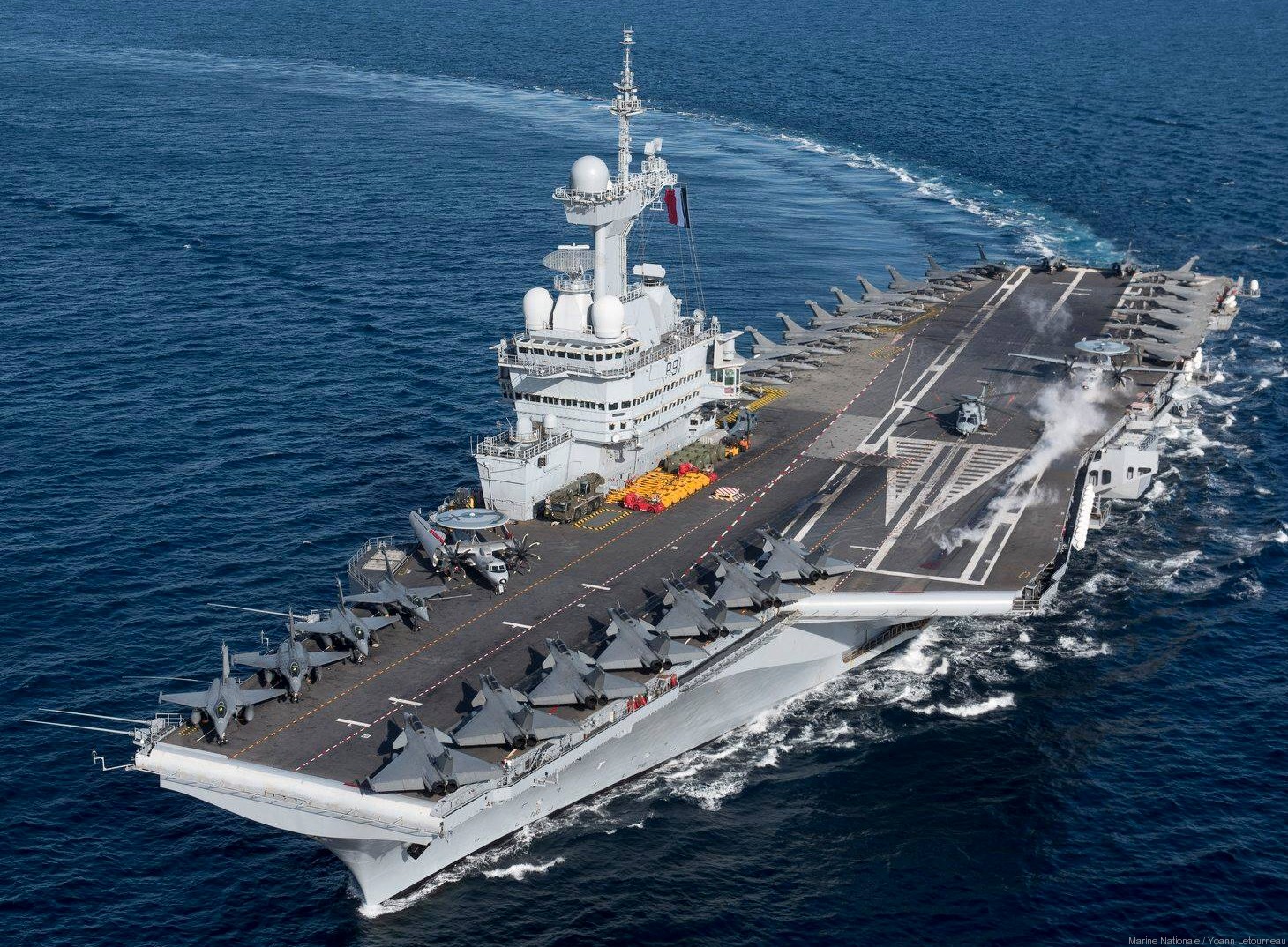
Aircraft Carriers 11 (Nuclear, giant) 1 (Charles de Gaulle) The De Gaulle is often undergoing maintenance.
Combat Aircraft ~3,000+ (F-22, F-35, etc.) ~200+ (Rafale/Mirage) US air dominance would be total within hours.
Logistics Global, unlimited Limited In Libya (2011), France ran out of precision munitions in a few days and asked for help… from the US.
Is Europe getting too hot?
These statements are symptomatic of an increasingly evident European pathology: the misalignment between rhetorical ambitions and factual reality.
- Abandonment syndrome: Europe, accustomed to living under the NATO umbrella paid for by American taxpayers, reacts hysterically to the possibility that America will return to focus on the Pacific or its own internal borders.
- Illusory grandeur: Paris still dreams of being a global power capable of dictating the agenda, but without the military industry and cheap energy needed to sustain such a role.
The idea that France could stand up as Europe’s defender against America is fascinating in a dystopian novel, but suicidal in reality. If the French army were to actually “project troops” against the US (as suggested in the hypothetical case of Greenland), it would last about as long as a croissant in a Marine cafeteria.
French impotence
General Richoux expresses, perhaps unwittingly, the frustration of a European elite that sees control slipping away. But calling for war against a historic ally because elections (or strategies) are not going as hoped is not “strategic sovereignty”: it is verbal adventurism. Perhaps, before declaring war on Washington, it would be wise to make sure you have enough ammunition for more than a weekend.
Questions and answers
Did General Richoux really propose attacking the United States?
He did not propose a cold attack, but in a hypothetical scenario (discussed in the video) in which the US attacked an allied territory (such as Greenland), he replied “possibly yes,” stating that they should be fought on principle. It is an extreme, theoretical statement, but indicative of a climate of deep mistrust and tension toward the American ally.
Why is there talk of “absolute betrayal”?
The expression refers to the possibility that the US might cut off military aid to Ukraine. For Richoux and part of the French establishment, this would be tantamount to breaking the transatlantic security pact, leaving Europe exposed to Russia. It is seen as a political and ethical betrayal, ignoring the fact that the US has strategic priorities that can change (e.g., China).
Could the French army really take on the US army?
Absolutely not. Although France has the most capable army in the EU, the technological, numerical, and logistical gap with the US is immense. France often depends on American assets (intelligence, strategic transport, in-flight refueling) for its foreign missions. A military confrontation would be unsustainable and would end in a quick and total defeat for Paris.
 Rimani aggiornato seguendoci su Google News!

L’agenda di Bruxelles: prima le recessioni, poi le deroghe. Il fallimento annunciato del Patto di stabilità e crescita

La BCE sta perdendo il controllo della nuova finanza

La ginnastica mentale che taglia i costi della demenza: il trionfo della velocità sulla memoria

Si può uscire dalla crisi energetica senza violare il Patto di Stabilità?

You must be logged in to post a comment Login